132 North Park Avenue, Rockville Centre, NY 11570

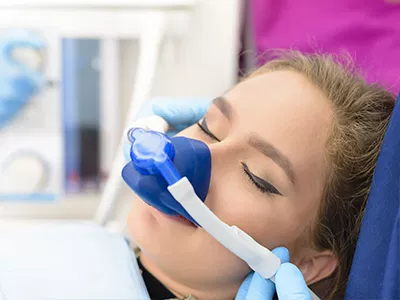
There are several ways to sedate or relax a patient prior to dental treatment. Adequate control of discomfort will minimize anxiety. Conscious sedation with nitrous oxide is simple. It has a rapid onset and recovery is quick and generally uneventful. Parenteral or intravenous sedation is when we put a medicine in your vein to relax you and make you unconscious or partially conscious. Parenteral sedation can make a procedure that produces anxiety for you much more relaxing.
Please discuss this option with us.
To qualify for IV Sedation, a patient's general doctor and/or cardiologist, must complete the below form. It is imperative that our surgeons/anesthesiologists have a full picture of your medical history including a list of current conditions, current medications, family history, allergies, and a recent EKG heart rhythm strip. You may have your doctor complete the form below and return it to the office a minimum of three (3) business days before your scheduled sedation appointment so that our doctors may have time to review and ask for any additional follow up they may need. Our goal is to complete your treatment painlessly and safely.
Medical Clearance Form for IV Sedation
Frequently Asked Questions
Q. What Types Of Sedation Are Available For Dental Treatment?
A. Common options include nitrous oxide (laughing gas) for conscious sedation and IV (intravenous) sedation, which delivers medication directly into a vein for deeper relaxation.
Q. How Does Nitrous Oxide Sedation Work?
A. Nitrous oxide is inhaled through a mask and works quickly to help you feel calm and relaxed. It has a rapid onset, and recovery is usually quick and uneventful.
Q. What Is IV Sedation In Dentistry?
A. IV sedation, also called parenteral sedation, involves administering medication directly into your vein. It helps patients become deeply relaxed and may make them partially or fully unconscious during treatment.
Q. Who Is A Good Candidate For Iv Sedation?
A. Patients who experience significant dental anxiety, fear, or discomfort during procedures may benefit from IV sedation, provided they meet medical qualification requirements.
Q. Is Sedation Dentistry Safe?
A. When proper medical history is reviewed and protocols are followed, sedation dentistry is designed to be both safe and effective, with the goal of providing painless treatment.
Q. Can Sedation Dentistry Help With Dental Anxiety?
A. Yes. Sedation dentistry is specifically designed to reduce anxiety and make dental procedures more relaxing for patients who feel nervous about treatment.
Q. What Is The Goal Of Sedation Dentistry?
A. The primary goal of sedation dentistry is to complete your dental treatment painlessly and safely, while minimizing anxiety and discomfort.