132 North Park Avenue, Rockville Centre, NY 11570

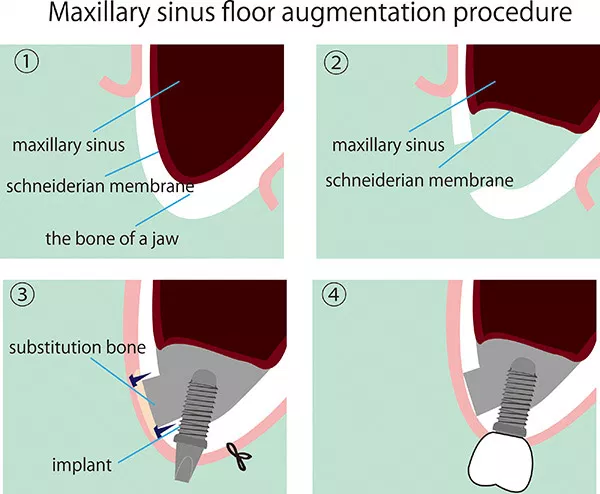
When replacing posterior upper teeth with dental implants, one of the limiting factors is the amount of bone available between the gum and the maxillary sinus. The maxillary sinus is essentially an air space within the upper cheek bone. If there is insufficient bone to allow for the placement of an implant, we may suggest a procedure called a sinus augmentation, sometimes known as a "sinus lift". During this procedure, the sinus membrane is lifted upward and donor bone is inserted into the floor of the sinus. After several months of healing, the bone becomes part of the patient's jaw and dental implants can be inserted and stabilized in this new sinus bone. Routine dental implant procedures can then be performed.
Quick Links
Frequently Asked Questions
Q. Why Would I Need A Sinus Lift Before Dental Implants?
A. You may need a sinus lift if there is insufficient bone between your upper jaw and the maxillary sinus. Without enough bone, dental implants cannot be securely placed.
Q. How Does A Sinus Augmentation Procedure Work?
A. During the procedure, the sinus membrane is gently lifted upward. Donor bone is then inserted into the floor of the sinus to increase bone height and allow for future implant placement.
Q. Is Sinus Augmentation The Same As A Sinus Lift?
A. Yes. Sinus augmentation and sinus lift are two terms used to describe the same procedure that increases bone volume in the upper jaw.
Q. How Long Does It Take To Heal After Sinus Augmentation?
A. Healing typically takes several months. During this time, the inserted bone integrates with your natural jawbone to create a strong foundation for dental implants.
Q. When Can Dental Implants Be Placed After A Sinus Lift?
A. Dental implants are usually placed after the healing period, once the new bone has fully integrated and stabilized within the sinus area.
Q. Is Sinus Augmentation Necessary For All Upper Dental Implants?
A. No. It is only required when there is insufficient bone height in the posterior upper jaw near the sinus cavity.
Q. How Do I Know If I Need Sinus Augmentation?
A. Your dentist will evaluate the bone height in your upper jaw using imaging techniques. If bone levels are too low near the sinus, a sinus lift may be recommended.
Q. Is Sinus Augmentation Safe?
A. When performed by a qualified dental professional, sinus augmentation is a predictable and safe procedure designed to prepare the jaw for implant placement.