132 North Park Avenue, Rockville Centre, NY 11570

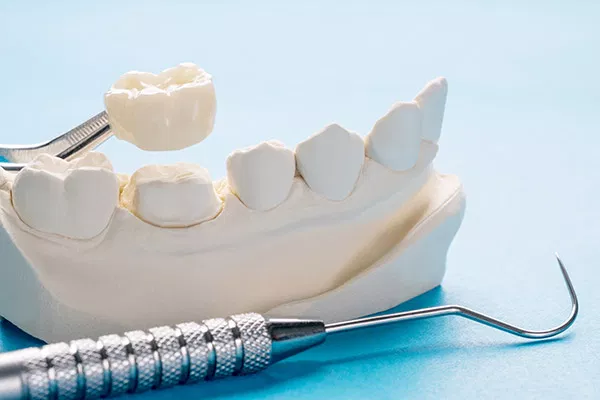
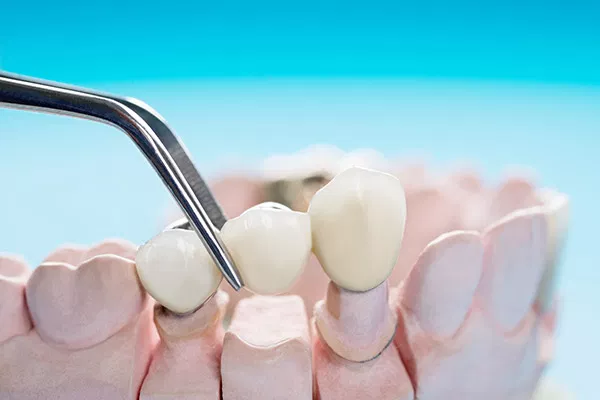
Dental crowns and dental bridges are one of the most common types of restorations performed in a general dentistry practice.
A crown, sometimes referred to as a “cap”, is a full coverage restoration. Whether due to decay and/or fracture of the natural teeth, it both strengthens the tooth as serves as a cosmetic improvement.
A bridge, also a form of prosthetic tooth replacement, is used to fill in the missing space or spaces caused by concerns with multiple teeth. Without filling spaces caused by missing teeth lost for carrying reasons, teeth will begin to shift out of alignment which can cause further dental problems. Misaligned teeth can cause periodontal disease due to the inability to properly clean them, leading to problems with speech and potentially cosmetic issues with your smile.
Some crowns and bridges are supported by dental implants placed in the bone, while others are not.
Crowns and bridges are made with a wide variety of materials including porcelain, porcelain fused to high noble metal, gold, metal alloys, ceramics, and resin. Your doctor can discuss with you which materials will be used for your specific restoration and why. Dental crowns and bridges are designed to look like a patients natural teeth in terms of shape and color.
At our office, teeth are prepped, impressions and/or digital scans are taken, and with the help of amazing laboratories that we partner with, we produce beautiful permanent restorations in just a couple of visits. Upon leaving our office in between visits, you will always have a temporary restoration in place while a permanent is being made.
Frequently Asked Questions
Q. What Is A Dental Bridge And How Does It Work?
A. A dental bridge is a fixed prosthetic restoration used to replace one or more missing teeth. It works by anchoring an artificial tooth to adjacent natural teeth or dental implants, filling the gap and restoring function and appearance.
Q. How Long Do Dental Bridges Last?
A. Dental bridges can last 10–15 years or longer with proper care, including regular brushing, flossing, and routine dental checkups.
Q. Are Dental Bridges Supported By Implants?
A. Yes, some dental bridges are supported by dental implants placed in the jawbone, while others rely on natural teeth for support. Your dentist will determine the best option based on your oral health.
Q. Does Getting A Dental Bridge Require Multiple Visits?
A. Yes, most dental bridges require two visits. During the first visit, teeth are prepared and impressions or digital scans are taken. A temporary restoration is placed while the permanent bridge is fabricated in a dental lab.
Q. Are Dental Bridges Permanent?
A. Dental bridges are considered a fixed restoration, meaning they are not removable like dentures. However, they may need replacement after many years due to wear or changes in oral health.
Q. What Happens If I Don’t Replace A Missing Tooth?
A. If a missing tooth is not replaced, neighboring teeth may shift, causing misalignment. This can increase the risk of gum disease, difficulty cleaning, bite issues, and cosmetic concerns.
Q. How Natural Do Dental Bridges Look?
A. Modern dental bridges are custom-designed to match the shape, size, and color of your natural teeth, providing a seamless and aesthetically pleasing result.